
Reviewed · 1-DAY TOURS
Matobo Hills Day Trip with Rhino Tracking
Rhinos on foot change the day. From Bulawayo, this eight-hour outing combines close white rhino encounters with the strange granite formations, rock art, sacred sites, and complicated history of Matobo Hills. Guide Blessing receives the strongest praise for his calm wildlife handling, clear explanations, and ability to turn a busy day into a personal experience.
I like the mix of walking, sightseeing, wildlife watching, and history. I also like that lunch, drinks, entry fees, transport, and a guide are included in the $140 price. The main consideration is physical: you walk outdoors on uneven ground, and the tour is not suitable for wheelchair users or people with back problems. Lunch may also come later than expected if the rhino tracking takes time.
In This Review
- The five details that shape this Matobo day
- Why Matobo Hills deserves a full day
- Leaving Bulawayo in the white safari truck
- Rhino tracking on foot, the day’s main event
- Rock paintings and a short 500-metre walk
- Balancing rocks, sacred places, and broad views
- Cecil Rhodes, Ndebele history, and the cost of conquest
- Snacks, a late lunch, and local flavors
- A varied route instead of a one-note safari
- Is $140 a fair price?
- Who should book this experience?
- Practical advice before you go
- Should you book the Matobo Hills rhino day trip?
- FAQ
- How long does the Matobo Hills day trip last?
- Where does the tour begin and end?
- What vehicle is used for the tour?
- Is rhino tracking done on foot?
- Are rhino sightings guaranteed?
- What else will I see besides rhinos?
- Is lunch included?
- Are entry fees included in the price?
- What language is the tour conducted in?
- What should I wear and bring?
The five details that shape this Matobo day
- Rhino tracking happens on foot: You may approach white rhinos to within several metres under strict guidance, though sightings and distance can never be guaranteed.
- Blessing is the guide to know: His former rhino ranger experience, local knowledge, and calm instructions receive repeated praise.
- World’s View adds history and scenery: Cecil John Rhodes’ grave sits among the granite hills, with broad views across the Matobo area.
- Rock art gives the hills a human story: The Bushmen paintings connect the natural setting with ancient life and the conservation story of reintroduced rhinos.
- The day is more than a game drive: You get a short trek, scenic driving, wildlife and bird spotting, history, an arts and crafts market visit, snacks, and a lodge lunch.
- Dress for the bush: Bring a hat, sunscreen, insect repellent, water-friendly outdoor clothing, and closed-toe shoes. Avoid bright colors.
Why Matobo Hills deserves a full day
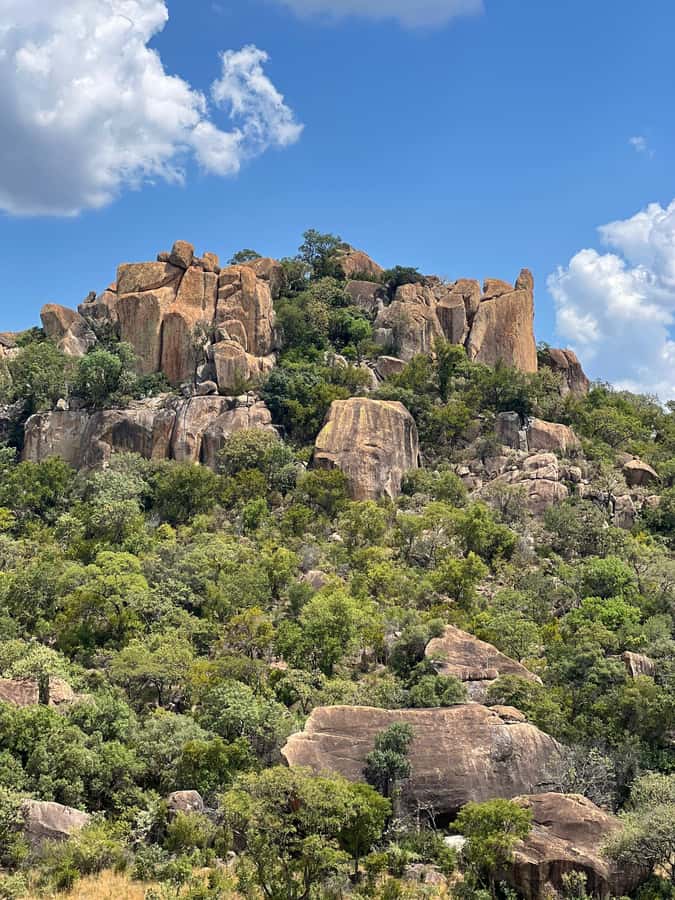
Matobo Hills, also called Matopos, is a UNESCO World Heritage Site in Matabeleland South. Its appeal comes from contrast. Huge rounded granite boulders and balancing rocks create a dramatic setting, yet the area also feels deeply tied to human life, worship, conflict, art, and memory.
You do not visit only to look at rocks. Your guide explains how plants, animals, painted caves, Ndebele history, colonial history, and modern conservation fit together. That wider view is what gives the outing its value.
From Bulawayo, the trip lets you see an important part of Zimbabwe without arranging a longer safari. You spend about seven hours around Matobo National Park, with the remaining time covering pickup and return. That makes it a practical choice if Bulawayo is your base and you have one free day.
The scenery changes as you move through the hills. You might pause for views, look for animals and birds, inspect unusual stone formations, or walk a short route toward rock paintings. The day has enough variety to keep it from feeling like a single long stop.
More day trips:
- Victoria Falls: Chobe National Park Day Trip with Lunch
★ 4.7 · 518 reviews - Chobe Day Trip from Victoria Falls, Zimbabwe
★ 4.6 · 250 reviews - Chobe Day Trip From Victoria Falls Zimbabwe
★ 4.5 · 196 reviews
Leaving Bulawayo in the white safari truck
Pickup and drop-off in Bulawayo are included. Look for the guide in a white open safari truck, a useful detail because it makes the meeting point easier to identify.
An open vehicle suits this outing. You can take in the scenery, watch for wildlife, and feel more connected to the granite country than you would in a closed car. It also means you should prepare for sun and changing weather. A hat and sunscreen are essential, while a light outer layer is sensible if conditions shift.
The vehicle is used for scenic driving and game viewing, but this is not a ride-only safari. You will get out and walk. Wear closed-toe shoes with a firm sole, and choose comfortable outdoor clothes that will not restrict your movement.
Bright colors are not allowed. Neutral or muted clothing is the better choice around wildlife. The rule is simple and worth following, since the day includes a close encounter with rhinos.
Rhino tracking on foot, the day’s main event
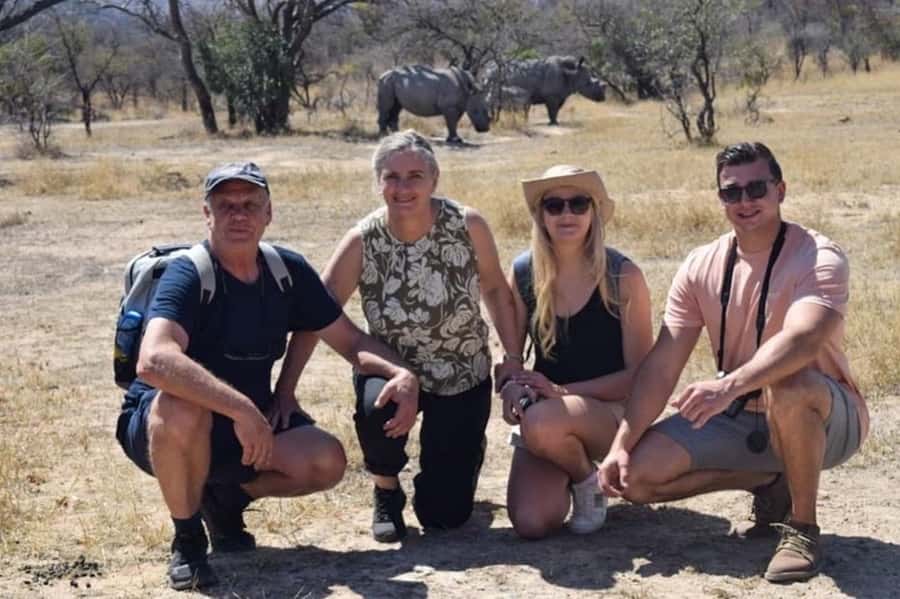
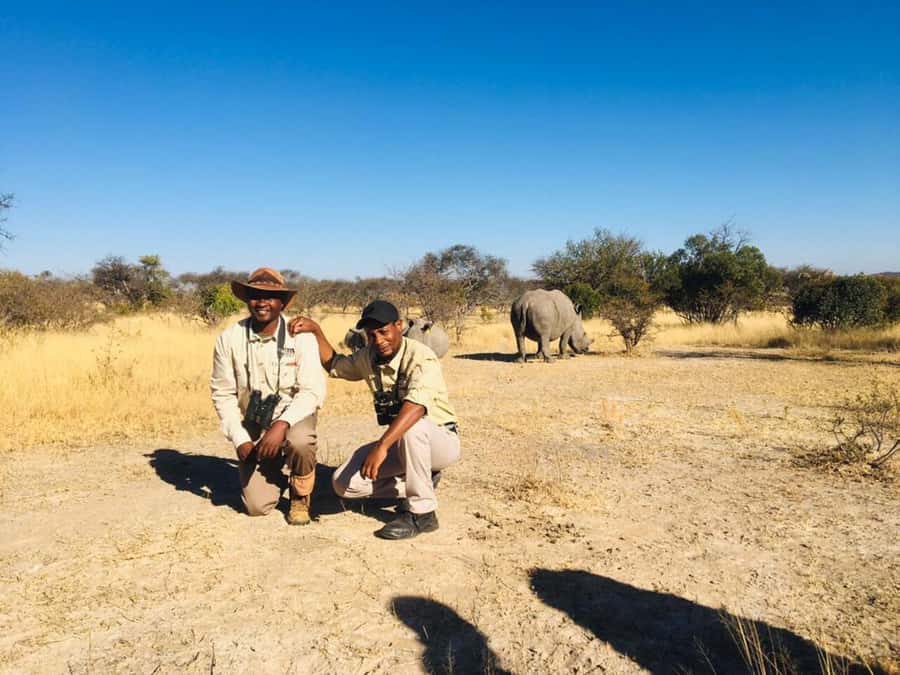
The rhino walk is the emotional center of this experience. Instead of watching animals only from a vehicle, you follow signs and move through their habitat with your guide. That changes your attention. You start noticing tracks, grazing areas, behavior, and the need to move carefully.
Blessing’s past work as a rhino ranger is important here. Several accounts describe him judging when to approach, how to position the group, and how to react when a rhino comes close. His instructions are not decoration. They are the reason this type of encounter can be exciting without becoming reckless.
Past sightings have included white rhinos at roughly six or seven metres. One particularly close encounter involved a young male that came within a few centimetres of Blessing’s knee while grazing. The group stayed still, as instructed, and allowed the animal to move on. That example shows both the thrill and the responsibility involved.
You must accept that wildlife is unpredictable. The advertised opportunity is to track rhinos, not to receive a guaranteed close sighting. The guide may make repeated attempts to locate animals, and the timing of the rest of the day can shift as a result.
Do not treat the rhino walk as a photo contest. Listen closely, keep your movements slow, and follow every instruction. The best part is being present in the moment, not getting the closest possible picture.
The conservation story adds depth. Your guide connects rhino reintroduction with the area’s rock paintings and the long relationship between people and wildlife in Matobo. That context makes the sighting more meaningful than a quick animal tick on a list.
Rock paintings and a short 500-metre walk
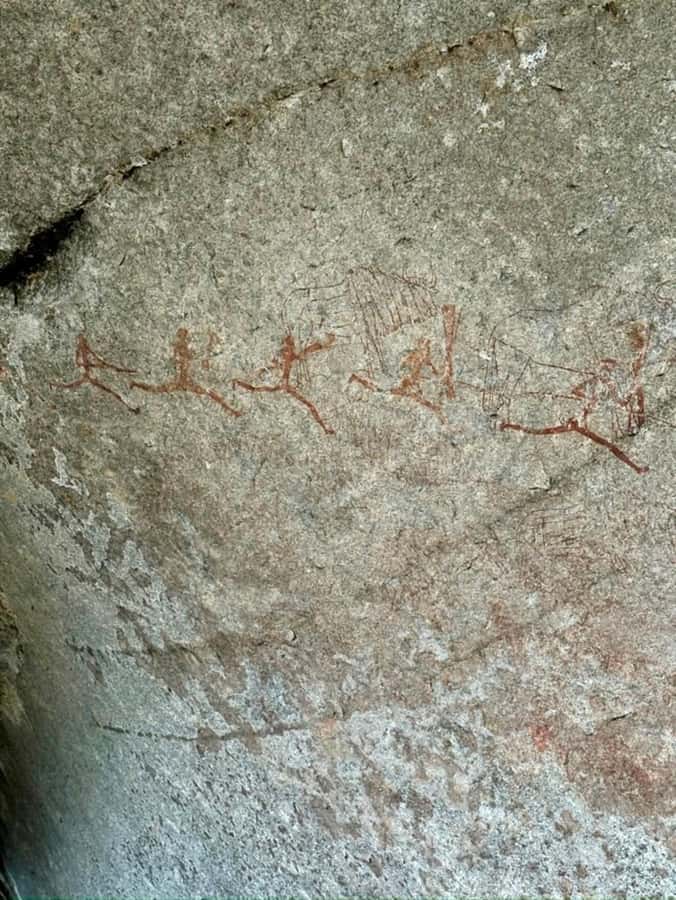
The visit to Bushmen paintings gives the day a quieter change of pace. The paintings are reminders that people have used, understood, and represented this area for a very long time.
The walk connected with this part of the visit has been described as about 500 metres and not difficult. Still, the ground is outdoors and may be uneven, so comfortable walking shoes matter. If you have back problems, this tour may not be a good fit.
Your guide explains the paintings and their place in the wider Matobo story. You may also learn about useful or healing properties associated with local plants. This is where a good guide makes a real difference. Without explanation, a painted rock surface can be easy to overlook. With context, it becomes part of a much larger story about people, plants, animals, and belief.
The rock art stop also balances the excitement of rhino tracking. You get time to look closely instead of moving quickly from one sight to the next.
A very different kind of day in Zimbabwe:
- Helicopter Scenic Flight over Victoria Falls 12-13 minutes Flight
★ 5.0 · 1,391 reviews - Victoria Falls: Dinner Cruise on the Zambezi River
★ 4.9 · 925 reviews - Dinner Cruise on the Zambezi River
★ 5.0 · 518 reviews - Victoria Falls: Boma Dinner and Drum Show
★ 4.4 · 415 reviews
Balancing rocks, sacred places, and broad views
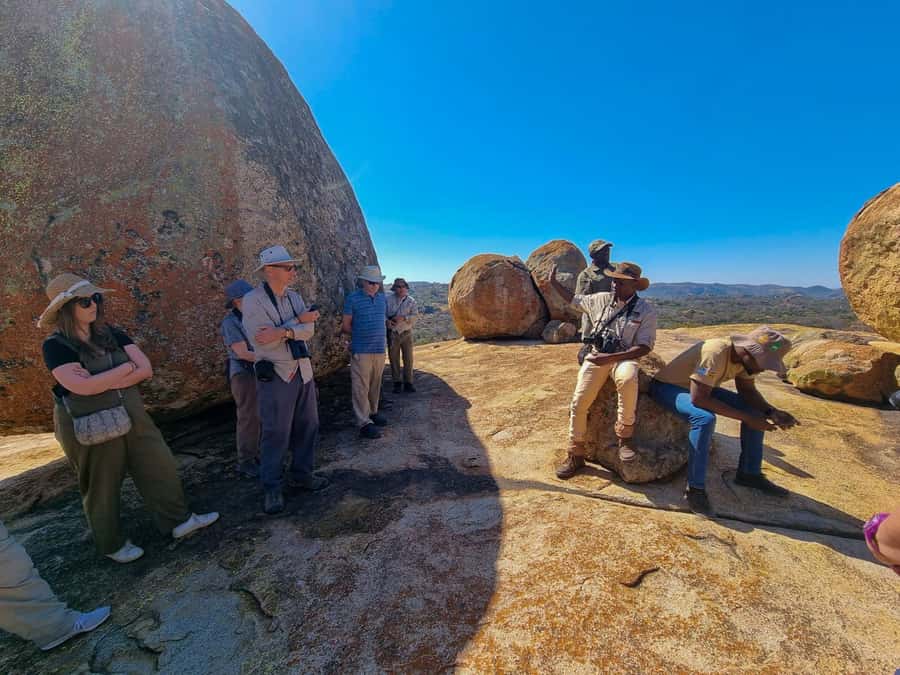
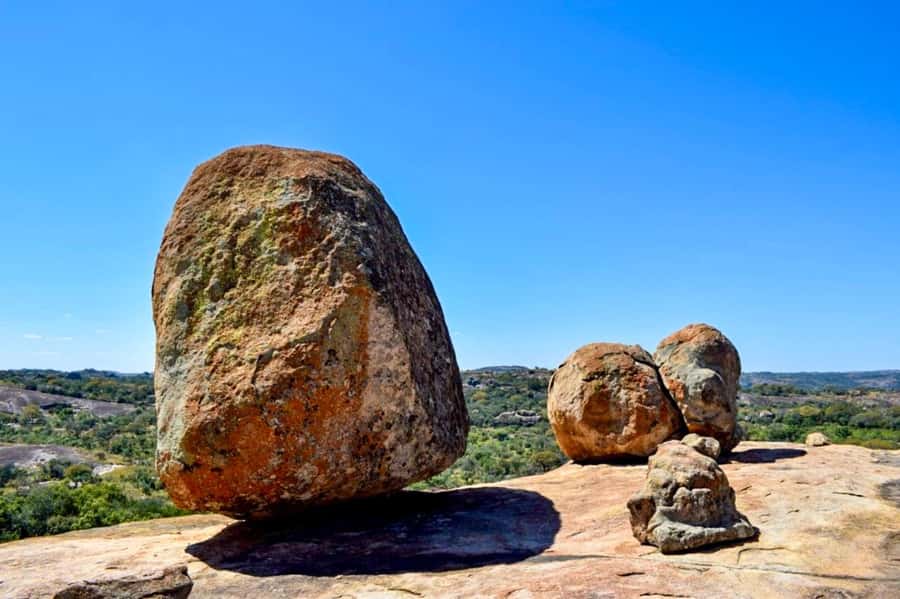
Matobo is famous for its granite formations. Balancing rocks give the scenery its playful, almost impossible quality, while the larger hills create a sense of scale. The formations are not just scenic backdrops. Some sites are sacred, and your guide helps explain their importance.
This is a place where you should slow down. Look at how the rocks sit together, notice the plants growing around them, and listen for birds. The tour includes wildlife viewing beyond rhinos, with guides pointing out smaller animals and birds along the route.
The views are particularly striking at World’s View, associated with Cecil John Rhodes. His grave lies in the hills, and the site offers a wide outlook across the surrounding country. The stop is historically important, but it is also a place where the scenery does much of the talking.
Your guide is expected to present factual information about Rhodes and the colonial period. That matters because the site can be treated too casually, as if it were only a scenic viewpoint. It is better understood as a place shaped by colonial ambition, local communities, and Zimbabwe’s continuing effort to interpret that past.
Cecil Rhodes, Ndebele history, and the cost of conquest
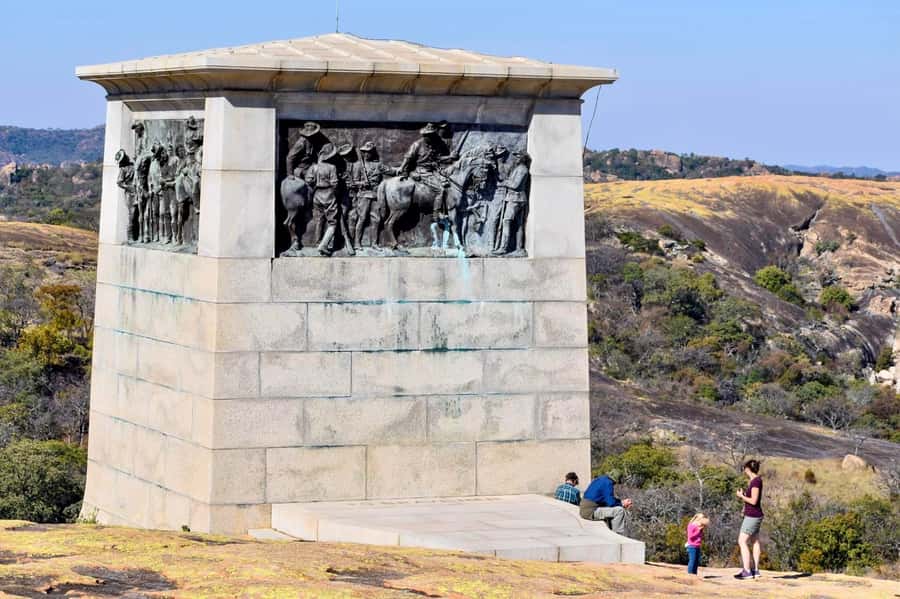
The history portion reaches beyond one grave. You learn about the relationship between Ndebele kings and the first European settlers, as well as the Matabele wars.
The account of the Shangani Patrol is especially stark: 3,000 warriors killed the patrol. This is not a tidy colonial adventure story. It reflects conflict, resistance, and the unequal power struggles that followed European expansion.
I value this part of the outing because it gives the hills a human dimension without separating history from place. The granite formations, royal connections, sacred sites, and colonial memorials all occupy the same area. A good explanation helps you understand why the Matobo Hills can feel beautiful and troubling at the same time.
Expect the guide to shape this material around the places you see. Ask questions if you want more detail. English is the tour language, and Blessing has been praised for explaining local history in a clear, engaging way.
Snacks, a late lunch, and local flavors
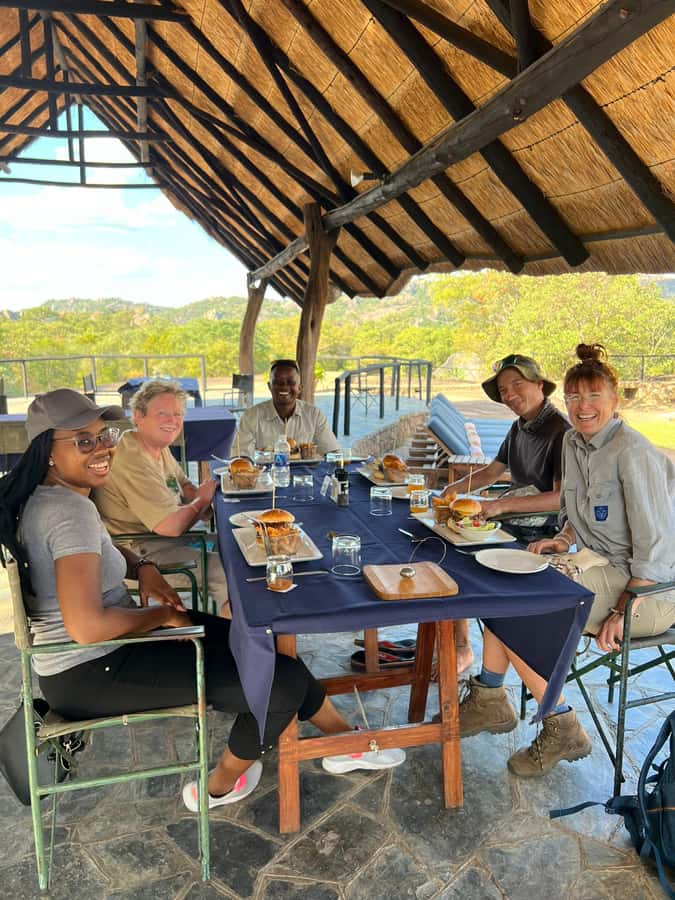
Lunch is included at a local spot or lodge in the Matobo Hills. The food has received strong praise, with descriptions of generous portions and local flavors served in a setting with good views.
The timing can be flexible. One day’s lunch came later than planned, likely because the group spent time tracking rhinos. This is a fair trade if the wildlife opportunity is strong, but you should not expect a fixed meal hour.
The guide may also provide fruit, drinks, and snacks during the day. That is useful on a warm outdoor outing, especially when walking and wildlife viewing take longer than expected. Bottled water and drinks are included, though bringing extra water is still sensible if you normally drink a lot in the heat.
The meal gives you a proper break after the morning’s activity. Rather than eating quickly in the vehicle, you can sit down, enjoy the view, and let the day’s sights settle in. If lunch is one of your priorities, mention it when arranging the outing so you understand how the schedule may work.
A varied route instead of a one-note safari
The advertised day includes a guided tour, scenic drive, walking, game viewing, a visit to an arts and crafts market, sightseeing, and scenic viewpoints. The exact order can change, especially when wildlife is involved.
That variety is a major strength. If rhinos are slow to locate, you still have rock art, history, plants, birds, granite formations, and viewpoints. If you love scenery but are less interested in colonial history, the walking and wildlife sections keep the day moving. If you are a history-minded visitor, the Ndebele and Rhodes discussions add substance.
The trade-off is that eight hours can feel full. You should expect a long day with several different activities rather than a relaxed single-site visit. People who want an unhurried photography session at every stop may find the pace busy.
The tour works especially well for a first visit to Matobo. You receive a broad introduction, then can decide if you want to return for a longer stay or a more specialized activity.
Is $140 a fair price?
At $140 per person, the cost is reasonable if you value convenience and a private-feeling, guide-led day. The price covers transport from Bulawayo, park entry fees and taxes, the Matobo Hills tour, rhino tracking, rock art, lunch, bottled water, and drinks.
You are also paying for judgment. Rhino tracking requires more than simply driving to a known viewing point. A guide with field experience can read behavior, manage distance, and explain what you are seeing. That is the part of the price that is hardest to measure but most important for safety and quality.
The value improves if you have only one day available. Organizing transport, entry fees, a wildlife guide, food, and multiple sightseeing stops yourself may save money in theory, but it would also add planning and risk missing the best parts.
It may be less attractive if you already have a vehicle, know Matobo well, or want to spend the entire day on one narrow activity. For most first-time visitors based in Bulawayo, the all-in format makes the price easier to justify.
Who should book this experience?
I would recommend it to you if you want a strong first taste of Matobo Hills and enjoy mixing wildlife with culture and history. It suits active visitors who can manage a short walk and uneven outdoor ground.
It is also a good choice for anyone who wants a close rhino encounter but prefers careful guidance over a rushed viewing stop. Families with older children may enjoy it, though the provided information does not specify a minimum age, so confirm that before booking.
You should think twice if you have back problems, use a wheelchair, or dislike walking outdoors. The experience includes a walk, wildlife conditions, changing weather, and an open safari truck.
Book with realistic expectations. Rhino tracking is a chance, not a promise. The day remains worthwhile because the hills offer much more than one animal sighting.
Practical advice before you go
Bring:
- A sun hat
- Sunscreen
- Insect repellent
- Closed-toe walking shoes
- Comfortable outdoor clothing
- Muted colors rather than bright clothing
Keep your camera ready, but do not let photography distract you from the guide. Around rhinos, your behavior matters more than your zoom lens.
The activity lasts eight hours, with availability depending on the starting time. Free cancellation is available up to 24 hours before departure, and you can reserve now and pay later. Those terms are useful if your Bulawayo plans may change.
The tour is conducted in English. Pickup is included, and the white open safari truck is the vehicle to watch for.
Should you book the Matobo Hills rhino day trip?
Yes, if you want one well-filled day from Bulawayo that covers rhinos, rock art, granite formations, colonial and Ndebele history, wildlife, and lunch. The strongest reason to book is Blessing’s field experience and his careful handling of close rhino encounters.
I would not choose it for a completely gentle sightseeing day. You walk, weather can vary, lunch may run late, and wildlife sightings cannot be controlled. But if you bring sensible clothing, accept a flexible schedule, and follow the guide’s instructions, the $140 package offers a lot: transport, food, entry fees, and a rare chance to meet rhinos on foot in one of Zimbabwe’s most distinctive settings.
FAQ
How long does the Matobo Hills day trip last?
The experience lasts eight hours, including pickup from Bulawayo and return there.
Where does the tour begin and end?
Pickup and drop-off are provided in Bulawayo.
What vehicle is used for the tour?
The guide uses a white open safari truck. This vehicle is used for scenic driving, sightseeing, and wildlife viewing.
Is rhino tracking done on foot?
Yes. The tour includes an opportunity to track rhinos on foot, under the direction of the guide.
Are rhino sightings guaranteed?
No. The activity provides an opportunity to track rhinos, but wildlife sightings and the distance from the animals cannot be guaranteed.
What else will I see besides rhinos?
The day includes Bushmen paintings, balancing rocks, sacred and historical sites, Cecil Rhodes’ grave, plants, birds, other wildlife, scenic viewpoints, and an arts and crafts market visit.
Is lunch included?
Yes. Lunch at a local spot or lodge in the Matobo Hills is included, along with bottled water and drinks.
Are entry fees included in the price?
Yes. All entry fees and taxes are included.
What language is the tour conducted in?
The tour is conducted in English with a live English-speaking guide.
What should I wear and bring?
Wear comfortable outdoor clothing and closed-toe shoes. Bring a sun hat, sunscreen, and insect repellent. Bright colors are not allowed, and you should be prepared for changing weather conditions.
Recently added in Zimbabwe
- Victoria Falls: Bush Experience and Stargazing D-F-ES-GB★ 4.3 · 3 reviews
- Victoria Falls National Park: Horseback Safari★ 5.0 · 3 reviews
- From Victoria Falls: Hwange National Park Day Safari★ 4.5 · 3 reviews
- Victoria Falls Private Guided Tour★ 4.5 · 3 reviews
- Great Zimbabwe Ruins Tour from Bulawayo with Picnic Lunch !★ 5.0 · 3 reviews
- African Village Tours★ 4.5 · 3 reviews
- Boma Dinner & The Drum Show Experience★ 4.5 · 3 reviews
- GUIDED TOUR OF THE VICTORIA FALLS ON THE ZAMBIAN SIDE★ 5.0 · 3 reviews
1-Day Tours, compared.
Chobe Extended Day Trip from Victoria Falls – Zimbabwe
Read our review →
Chobe Day Trip – From Vic Falls – With Lunch (Buffet)
Read our review →Browse the lists this tour appears in