
Reviewed · 1-DAY TOURS
Khami Ruins Day Trip
Khami keeps its secrets in stone. This short outing from Bulawayo takes you to Zimbabwe’s second-largest stone-built monument, a 16th-century capital made of dry-stone walls, platforms, passageways, and decorated terraces. I like the private transport and the chance to explore with your own group, and I especially like that the site remains archaeologically important because it was not heavily damaged by treasure hunters.
I also like the strong guiding. Lesley provided hotel pickup for one booking and explained the ruins clearly, while an on-site guide helped another visitor understand the details of the walls. The main consideration is that admission fees and taxes are not included in the $80 price, so you should allow extra money at the gate.
In This Review
- Key points to know before you go
- Why Khami matters beside Great Zimbabwe
- The 30-minute ride from Bulawayo
- The Hill Ruin and the Mambo residence
- Vlei, Monolith, and Passage platforms
- Decorative walls and the remains of daily life
- A three-hour visit with room to look closely
- What the $80 price really covers
- The guide can make or break the ruins
- Who will enjoy Khami most
- Booking, cancellation, and practical checks
- Should you book the Khami Ruins trip?
- FAQ
- Where is Khami Ruins located?
- How long does the Khami Ruins experience last?
- What is included in the tour price?
- Are admission fees included?
- Is hotel pickup available?
- Is this a private tour?
- Can I cancel for a full refund?
- What happens if bad weather cancels the tour?
Key points to know before you go
- Khami is about 30 minutes from central Bulawayo, making it an easy half-day outing rather than a major expedition.
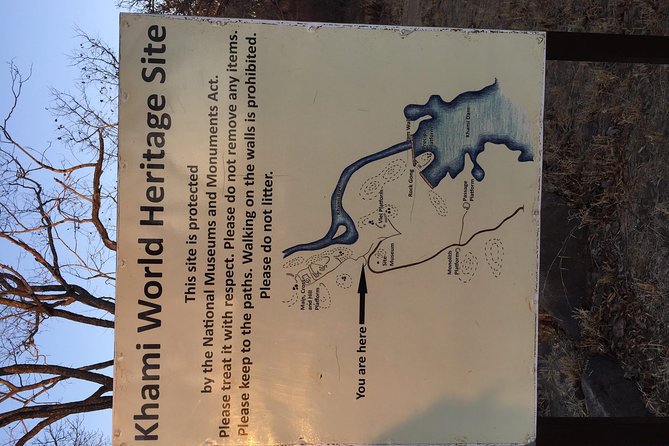
- The 16th-century Torwa Dynasty capital includes the Hill Ruin, chief’s residence, platforms, galleries, and decorated walls.
- Private transportation keeps the trip flexible, with only your group taking part.
- The site is a UNESCO World Heritage Site and is especially valuable for anyone interested in archaeology and Zimbabwean history.
- The advertised visit lasts about three hours, while the full experience is generally described as two to four hours.
- Snacks, bottled water, and an air-conditioned vehicle are included, but entry fees and taxes are extra.
Why Khami matters beside Great Zimbabwe
Khami is not simply a smaller repeat of Great Zimbabwe. It occupies an important place between the better-known Great Zimbabwe tradition and the later period of Zimbabwean history. That makes the site useful for understanding how stone-building traditions continued and changed over time.
The ruins were once the capital of the Torwa Dynasty in the 16th century. You are not looking at one isolated stone building. The site is a connected group of platforms and walls, arranged across a broad archaeological area.
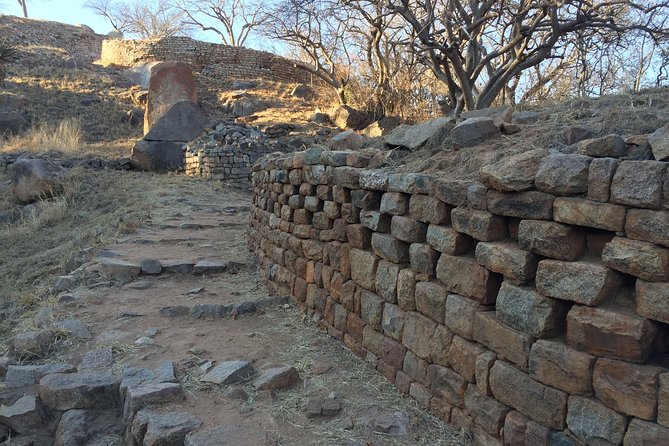
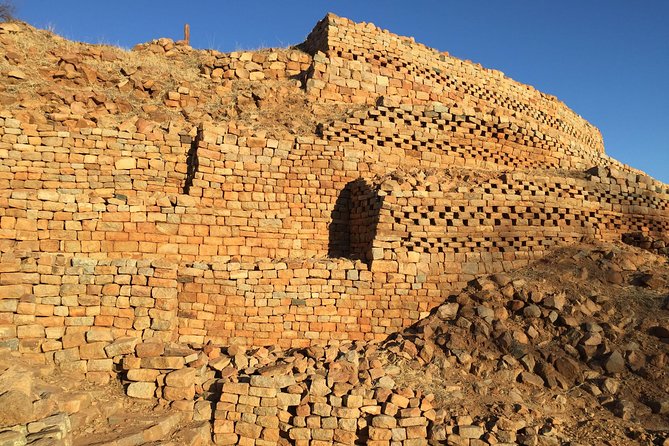
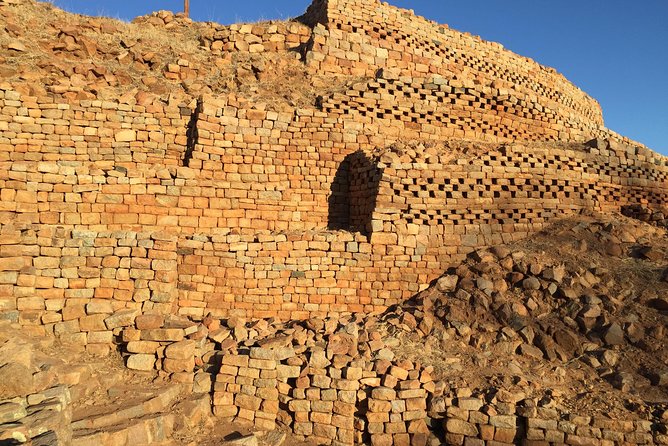
The construction method is dry-stone work. The stones were fitted without mortar, creating walls that could be both practical and decorative. At Khami, the workmanship includes chevron and chequered patterns, narrow passageways, galleries, and carefully arranged platforms.
Khami’s archaeological value also comes from what was not disturbed. The site was one of the few important Zimbabwean sites not badly damaged by treasure hunters. Its undisturbed layers give researchers a clearer record of how people lived, built, and organized society here.
That point matters when you visit. You are not just seeing impressive stonework. You are seeing an archaeological record that can tell a more reliable story because much of the site remained in place.
More day trips:
- Victoria Falls: Chobe National Park Day Trip with Lunch
★ 4.7 · 518 reviews - Chobe Day Trip from Victoria Falls, Zimbabwe
★ 4.6 · 250 reviews - Chobe Day Trip From Victoria Falls Zimbabwe
★ 4.5 · 196 reviews
The 30-minute ride from Bulawayo
For most people, the trip begins with pickup in Bulawayo. Khami is roughly 30 minutes from the city center, so the drive does not consume your day. That short transfer is one of the tour’s practical strengths, especially if you are using Bulawayo as a base and want to add a historic site without arranging a long journey.
The vehicle is air-conditioned, and private transportation is included. That is useful in Zimbabwe’s heat and gives you a more comfortable ride than trying to coordinate separate transport to an archaeological site.
Pickup is offered, and one booking specifically included hotel pickup with Lesley arriving on time. That is a helpful sign for anyone who dislikes uncertain morning arrangements. Still, confirm your pickup details when booking, since the exact meeting point is not provided in the information available here.
The trip is usually booked about 17 days ahead. You do not necessarily need to reserve months in advance, but booking early is sensible if you have a fixed Bulawayo schedule or need a particular date.
The Hill Ruin and the Mambo residence
The main visit focuses on the Hill Ruin, also called the Hill Complex. This is where the chief’s residence, known as the Mambo, was located. The elevated setting and complex wall arrangement help you picture how authority and daily life were organized around the royal center.
You will see more than a simple foundation. The Hill Ruin is part of a wider system of platforms and stone structures, with walls shaping movement through the site. Narrow passages and perambulatory galleries are among the details that make Khami feel like a planned settlement rather than a random collection of collapsed buildings.
The term Mambo refers to the chief or ruler. Seeing the location associated with that leadership gives the site a human focus. Instead of only asking how old the stones are, you can think about who controlled the settlement, who worked there, and how people moved between public and private spaces.
A guide adds real value here. The stonework is attractive on its own, but its purpose may not be obvious without explanation. A good guide can connect the walls, platforms, and residence to the wider Torwa Dynasty period.
Vlei, Monolith, and Passage platforms
The tour also covers the Vlei, Monolith, and Passage platforms. These names are useful because they show that Khami is made up of several distinct sections, each contributing to the larger picture.
The platforms are built into a complex arrangement of dry-stone walls. You might find yourself paying closer attention to how the builders managed changes in height and movement across the site. The Passage platform, in particular, points to the importance of controlled routes through the settlement.
The Monolith platform and the Vlei area add further variety. You should not expect one dramatic structure to explain everything. Khami rewards a slower look at the relationship between terraces, walls, paths, and open areas.
This is also where a guided visit is better than a quick stop alone. The site can look like a series of beautiful stone lines if you do not know what you are seeing. Explanations help you recognize the difference between a residential area, a ceremonial or administrative space, and a defensive or separating wall, though exact interpretations can depend on the archaeological evidence.
A very different kind of day in Zimbabwe:
- Helicopter Scenic Flight over Victoria Falls 12-13 minutes Flight
★ 5.0 · 1,391 reviews - Victoria Falls: Dinner Cruise on the Zambezi River
★ 4.9 · 925 reviews - Dinner Cruise on the Zambezi River
★ 5.0 · 518 reviews - Victoria Falls: Boma Dinner and Drum Show
★ 4.4 · 415 reviews
Decorative walls and the remains of daily life
Khami’s walls are not plain. Chevron and chequered designs appear in the stonework, giving the structures a visual rhythm that is easy to miss in photographs. I would pay attention to these patterns rather than rushing toward the largest ruin.
The settlement also included daga huts, made with cobwork, where much of the population lived. Those huts were surrounded by granite walls and other stone structures. The contrast is important: the site was not only a royal compound. It was a functioning settlement with different types of buildings and social spaces.
The surviving stone walls are the most visible remains, but the original community was larger and more varied than the stonework alone suggests. Your guide can help fill in that gap, explaining how temporary or less durable materials once fitted into the permanent stone setting.
If you enjoy archaeology, this mixture of surviving and vanished materials is part of Khami’s appeal. If you prefer a site with complete buildings and many objects on display, you may find the experience more demanding. Much of the pleasure comes from interpreting foundations, walls, and layout.
A three-hour visit with room to look closely
The main stop is planned for about three hours. The entire experience is generally listed as lasting two to four hours, depending on the day and the time spent exploring.
Three hours is a good length for this site. It gives you time to see the main structures, hear the history, pause at the decorated walls, and cover the different platforms without turning the visit into a rushed checklist.
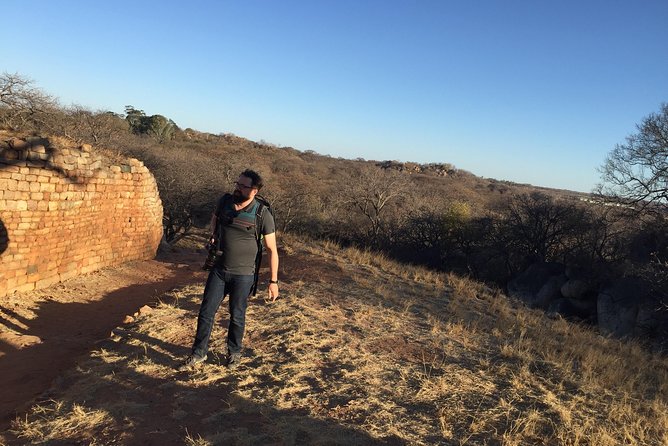
A visitor who wanted to cover the buildings and structures in detail for a YouTube project spent about three hours on the tour. That is a useful guide for anyone who likes to take photographs, make notes, or ask plenty of questions.
You should also be aware that this is an archaeological site, not a modern museum. The experience is based on walking through the ruins and making sense of what remains. Comfortable clothing and shoes are sensible, although specific walking conditions are not provided.
The tour requires good weather. If poor weather causes cancellation, you are offered another date or a full refund. That policy is fair, but it also means you should avoid placing the visit on the last possible day of a tightly packed trip.
What the $80 price really covers
The cost is $80 per person. That is not the cheapest way to reach a site only about 30 minutes from Bulawayo, but the value depends on what you need.
For the price, you receive private transportation, an air-conditioned vehicle, bottled water, and snacks. Pickup is offered, and only your group participates. If you would otherwise need to arrange a taxi, find the site independently, and locate an explanation once you arrive, the package becomes more appealing.
The private format matters most if you want to set the pace. You can spend longer examining the Hill Ruin, ask questions about the wall decorations, or take time with photographs without being tied to a large group. It is also a good fit for couples, families, or small parties who prefer a personal outing.
The main cost limitation is clear: admission fees and taxes are not included. Ask for the current entrance cost before you go, then compare the complete total rather than judging the tour by the advertised price alone.
Group discounts may be available. If you are traveling with several people, ask how the discount applies and whether the saving changes the value for your party. For a solo visitor, the private arrangement can feel costly. For a small group sharing the convenience, it may make better sense.
The guide can make or break the ruins
Khami is the sort of place where guiding matters. The walls do not label themselves, and the significance of the layout is not always clear from a first glance.
Lesley was praised for providing hotel pickup and explaining the history thoroughly. That combination is useful because it covers both parts of the outing: getting there without hassle and understanding what you are seeing once you arrive.
There is also an on-site guide who can explain details of the ruins. That gives you another chance to ask about the structures, decorative patterns, and arrangement of the platforms.
The available information does not promise that Lesley will personally lead every departure, so you should confirm who will guide your particular booking. Still, the experience clearly places importance on interpretation rather than simply dropping you at the gate.
If you are making a video or taking extensive photographs, tell the guide at the start. One visit was arranged to cover all the buildings and structures for a YouTube channel, and the three-hour format allowed time for that wider coverage.
Who will enjoy Khami most
I would recommend this outing to you if you have an interest in archaeology, African history, architecture, or the development of Zimbabwean states. It is also a strong choice if you are staying in Bulawayo and want a historic site close to the city.
You will get the most from it if you enjoy looking carefully at walls, platforms, and settlement plans. The tour is less suited to someone who wants a quick scenic drive or a site filled with intact interiors and large museum displays.
Families and small groups may appreciate the private format. The vehicle is air-conditioned, snacks and water are supplied, and the duration is manageable for a half-day plan. Since most people can participate, it does not appear to require a specialist level of fitness, though the information does not provide detailed accessibility notes.
History-focused photographers and content creators have another reason to consider it. The patterned stonework, long walls, passages, and elevated structures provide plenty to study and photograph. Bring patience, because the best details may be smaller than the main view.
Booking, cancellation, and practical checks
Confirmation is provided at the time of booking. You can cancel for a full refund if you do so at least 24 hours before the experience begins.
Cancellations made less than 24 hours before the start time are not refunded, and changes within that period are not accepted. Cut-off times follow local time in Zimbabwe, so check the clock carefully if you are arranging plans from another time zone.
The tour also requires a minimum number of participants. If that minimum is not reached, you are offered another date or experience, or a full refund. This is worth remembering if your schedule has no spare half-day.
Before paying, confirm three items: the pickup point, the entrance fee, and who will guide your group. Those questions will give you a clearer idea of the final cost and the exact shape of your visit.
Should you book the Khami Ruins trip?
If you are in Bulawayo and care about Zimbabwe’s past, I think you should book it. Khami offers an important link between Great Zimbabwe and later Zimbabwean history, and its carefully built walls, decorated stonework, platforms, and royal complex deserve more attention than they usually receive.
The tour is best when you want comfort and explanation rather than the lowest possible price. The $80 cost is easier to justify for a private group, especially with transport, snacks, water, and guiding included. If you are traveling alone on a strict budget, compare the total price with other transport options and remember that admission is extra.
Choose this experience for the site itself, but also for the chance to understand it. With a punctual pickup, a strong guide such as Lesley, and enough time to explore the main structures, Khami makes a worthwhile half-day addition to a Bulawayo stay.
FAQ
Where is Khami Ruins located?
Khami Ruins is in Zimbabwe, about 30 minutes from central Bulawayo.
How long does the Khami Ruins experience last?
The experience lasts approximately two to four hours. The planned visit to Khami Ruins is about three hours.
What is included in the tour price?
The price includes an air-conditioned vehicle, private transportation, snacks, and bottled water.
Are admission fees included?
No. Admission tickets, fees, and taxes are not included in the stated price.
Is hotel pickup available?
Yes. Pickup is offered, and hotel pickup was provided for one booking.
Is this a private tour?
Yes. This is a private activity, and only your group participates.
Can I cancel for a full refund?
Yes. You can receive a full refund if you cancel at least 24 hours before the experience start time.
What happens if bad weather cancels the tour?
If poor weather causes cancellation, you are offered a different date or a full refund.
Recently added in Zimbabwe
- Victoria Falls: Bush Experience and Stargazing D-F-ES-GB★ 4.3 · 3 reviews
- Victoria Falls National Park: Horseback Safari★ 5.0 · 3 reviews
- Victoria Falls Private Guided Tour★ 4.5 · 3 reviews
- Great Zimbabwe Ruins Tour from Bulawayo with Picnic Lunch !★ 5.0 · 3 reviews
- From Victoria Falls: Hwange National Park Day Safari★ 4.5 · 3 reviews
- African Village Tours★ 4.5 · 3 reviews
- Boma Dinner & The Drum Show Experience★ 4.5 · 3 reviews
- GUIDED TOUR OF THE VICTORIA FALLS ON THE ZAMBIAN SIDE★ 5.0 · 3 reviews
1-Day Tours, compared.



Chobe Extended Day Trip from Victoria Falls – Zimbabwe
Read our review →
Chobe Day Trip – From Vic Falls – With Lunch (Buffet)
Read our review →Browse the lists this tour appears in